
This article is part of a newly introduced series discussing how industries may adapt to disruptive technological innovations. In this article, we’ll focus on the disruption of the corrective orthodontics market by teledentistry services.
Teledentistry is expected to expand itsÌýimportance inÌýbothÌýthe fields ofÌýdentalÌýand telehealthÌýservicesÌýdueÌýto its significant competitive advantages andÌýability to reach anÌýunderserved market.ÌýTheÌýAmerican Teledentistry AssociationÌý()Ìýdefines teledentistry as “the use of electronic information, imaging and communication technologies, including interactive audio, video, data communications…Ìýto provide and support dental care delivery, diagnosis, consultationÌý[and]Ìýtreatment.â€�Ìý
As a result of this accessibility, teledentistry has emerged as a growing subset of the larger $2.6 billion Telehealth Services industry in the United States.ÌýTeledentistry’sÌýrapid rise isÌýalsoÌýattributable to theÌýentrance of several direct-to-consumer (DTC)Ìýproviders ofÌýclear alignersÌýand braces. The verticallyÌýintegrated DTC business model has significantly lowered the cost of corrective orthodontics, thusÌýdisrupting the traditional orthodontics market.ÌýÌý
Vertical integrationÌý
Teledentistry has thrived due in part to its vertical integration. For example,Ìýindustry playerÌý provides teledentistry services through its at-home starter kit,Ìýwhile also serving as the manufacturer ofÌýitsÌýclear aligners.ÌýThis effectively also placesÌýSmileDirectClubÌýin the $41.6 billion Medical Device Manufacturing industry in the United States. With an integrated supply chain,ÌýSmileDirectClubÌýgenerates significant costÌýsavings that are passed on to consumers.ÌýÌý
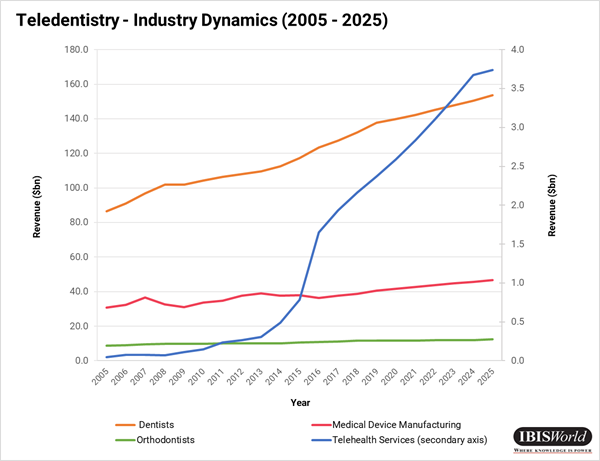
From an industry perspective, vertically-integrated teledentistry operatorsÌýreceive greater tailwinds from the rapidly growing Telehealth Services industry than the Medical Device Manufacturing industry. 91¶¶ÒùÌýforecastsÌýthe Telehealth Services industry to expand 9.2% in 2020, significantly outpacingÌýan anticipatedÌý2.3% growth inÌýMedical Device Manufacturing.
´¡³¦³¦±ð²õ²õ¾±²ú¾±±ô¾±³Ù²âÌý
In addition to vertical integration,Ìýteledentistry’sÌýDTC channelÌýprovides additional costÌýsavings by eliminating clinical overhead and markup.ÌýThis improves the overall accessibility of corrective orthodontics;ÌýDTC clear alignersÌýbothÌýcost approximatelyÌý50.0% lessÌýthan doctor-directed alignersÌýandÌýare conveniently delivered. According to theÌý, about 20.0% of Americans live in rural areas that do not have suitable access to dentists and orthodontists,Ìýexemplifying the industry’s underserved market.ÌýÌý
Despite the advantages of DTC clear aligners, doctor-directed braces currently remain the norm. The $11.8 billionÌýOrthodontists industryÌýboasts a wider range of capabilities and market exposureÌýin the clear-aligner space.ÌýThis is primarily due to the long-standing, dominant position of InvisalignÌý(a brand ofÌýmanufacturerÌý)Ìýand its doctor-directed business model. In contrast to DTC teledentistry providers, patients must receiveÌýtheseÌýcorrective orthodontic treatmentsÌýunder the continued supervision of an orthodontist.ÌýÌý
Ìý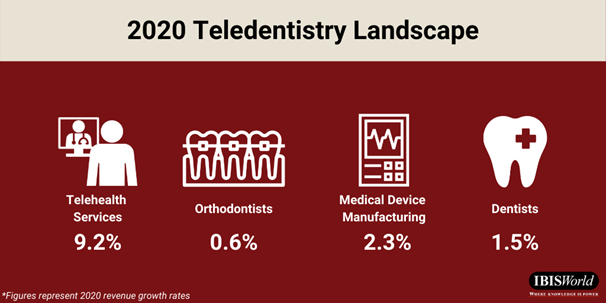
OutlookÌý
Moving forward,Ìýhowever,Ìýmarket dynamics willÌýlikelyÌýfavor teledentistry operators. From a top-down perspective, healthy consumer spending levels and low unemployment will continue to support baseline consumer discretionary expenditures, which includes cosmetic orthodontics. Furthermore, faster and more-accessible internet connectionsÌýwill likely continue toÌýfacilitateÌýgrowth in the telemedicine realm.ÌýIBISWorld forecasts the Telehealth Services industry to maintain its expansion over the coming years, growing 9.6% and 9.4% in 2021 and 2022, respectively. Finally, the sizable cost-savings afforded by teledentistry will increase the accessibility of clear aligners to underserved markets.ÌýÌý